

Final chapter of TRINITY: An Immersive Lament in the Age of Extinction
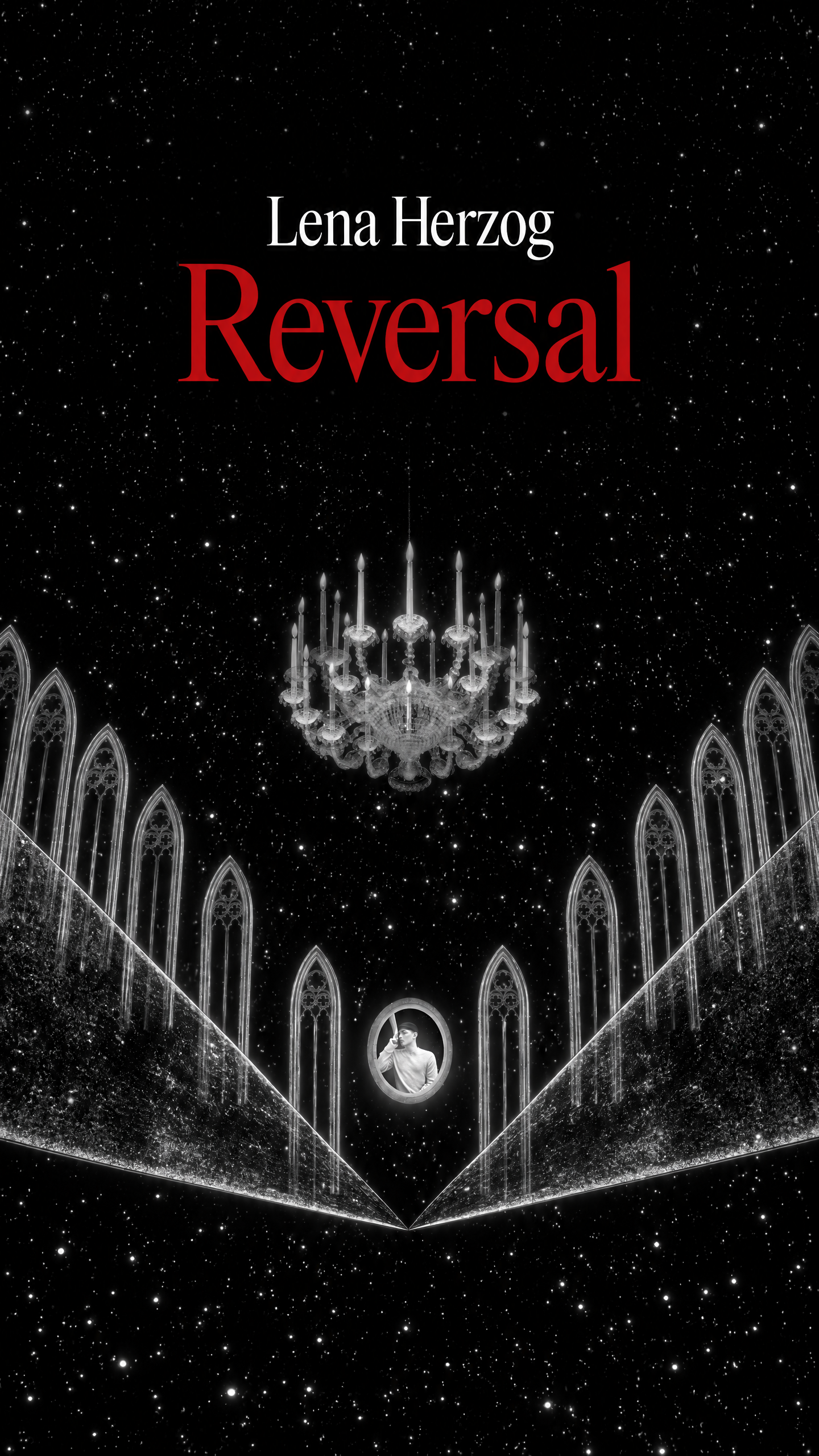
(06)
REVERSAL
SILENCED VOICES.
TEN MINUTES TO DECIDE.
A REASON TO HOLD ON.
This interview has been edited for length and clarity.
At Annecy, the warm, colourful bustle of the festival fades away as soon as the headset goes on. TRINITY: An Immersive Lament in the Age of Extinction asks for a slower, more contemplative pace. The trilogy moves from loss to hope: Last Whispers mourns extinct languages, Any War Any Enemy imagines a nuclear end, and Reversal answers with a dance. Its imagery is deeply emotional and seems meant to awaken the desire to hold on to the world, what Lena Herzog calls amor mundi.
Lena Herzog is a multidisciplinary artist who works in a wide range of media, from analogue photography and 17th-century engraving to sound and VR. She works with Jonathan Yomayuza, a VR technical director and pioneer of photogrammetry, who has engineered her VR work since 2018.
Only Reversal was on show at the festival, but Jonathan, the project’s VR engineer and producer, let me experience the whole trilogy on an Apple Vision Pro, as the creators intended.
ITS IMAGERY SEEMS MEANT TO AWAKEN THE DESIRE TO HOLD ON TO THE WORLD.
How did you first encounter VR? Was it as an audience member, or through your own work?
/ LENA HERZOG / It's a bit of a chicken-and-egg situation. I had a project about extinct languages. At its core, it was a resurrection project: I wanted to bring extinct languages back to life. I created an immersive sound experience, but without immersive imagery, which premiered at the British Museum, in the Living and Dying gallery, opposite the gallery with the Rosetta Stone.
I noticed that people were running around trying to locate themselves. The sound was immersive, but the image wasn't, and their brains were trying to bridge that gap. That's when I started thinking about immersive work and VR. The idea drove the medium, not the other way around. I needed to fulfil the idea as fully as possible, and that brought me to VR.
I’d seen works that felt synthetic and didn’t move me. Then I saw Notes on Blindness, which was beautiful, but it wasn’t just that work that drew me to the medium. There's something almost magical about being inside a frame. When you look at a painting or a photograph, there's a childlike desire to jump into it and look around. You don't want to be seen inside the frame; you want to see it from within. What would it be like to be there, to transport yourself into that world?
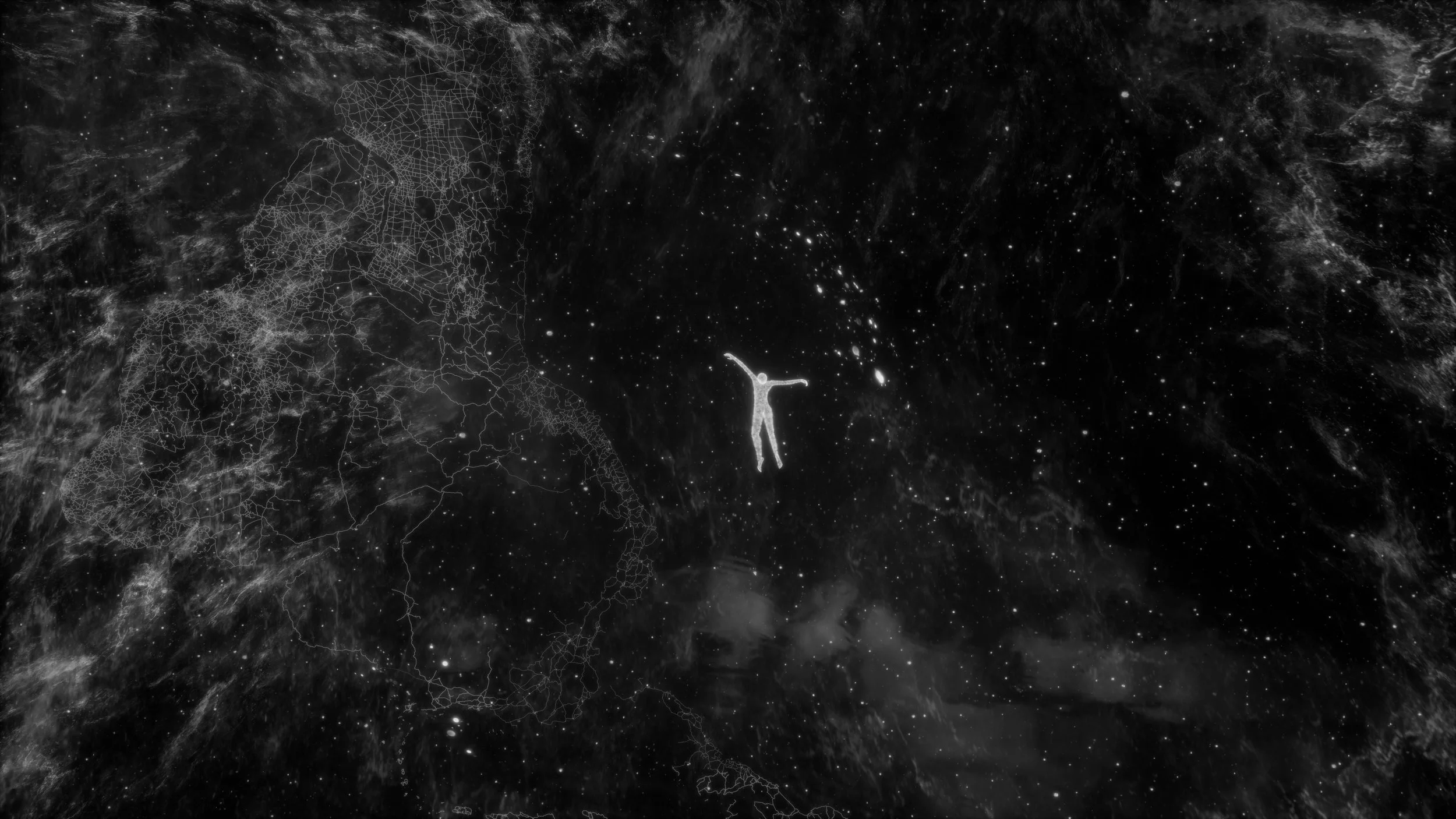
/ Souls rise through stardust.
That's an extraordinary feeling. And there's tremendous power in it: the ability to create a sense of presence, if it's done well. In a way, you can raise the dead. You can bring something back to life that is no longer around. You can create a work about extinct and endangered languages and make people feel immersed, through both sound and image, in that world.
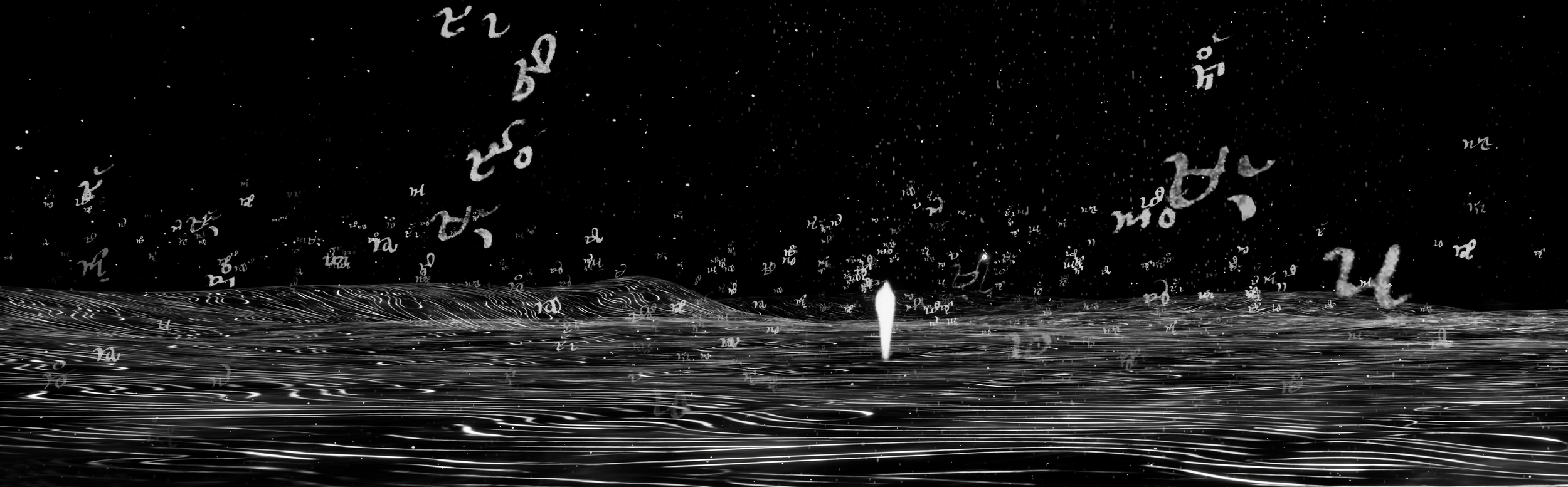
/ A lone figure in the dunes, where an extinct language is sung.
Has it been difficult to explain the kind of work you do to people outside the field?
/LH/ Very difficult. We don't really have the language for it yet. I personally don't have the language to describe what I've made, which is paradoxical, because the first chapter of the trilogy is about language. But this isn't a loss of language; it's a language that hasn't been created yet.
The vocabulary for immersive art is very limited because it's such a new medium. When I say “VR”, it almost hurts me, because what I've made isn't really VR in the way people usually understand it. It uses the same equipment, but it's not a game. You're not watching zombies or running from dinosaurs. You are not killing anyone; you can actually create a life-affirming work instead, even when showing tragedy.
The technology I'm using is mostly associated with gaming. That's a legitimate art form in its own right, but it has a particular aesthetic and culture. One of the challenges for artists is the complexity of the technology and the fact that many of the people fluent in it have grown up within that gaming culture. We need to find a language that allows other kinds of work to be understood.
If the language doesn’t exist yet, how do you describe Trinity in practice?
/LH/ Museums often ask me how they should describe what I've made. I've struggled with that, but eventually I settled on a description for the trilogy.
The description reads: Trinity is an immersive poem. It is a work of experiential visual art and of music, devoted to existential questions of culture, war, and peace. It asks how the world might end, and how it might begin again.
I call it an immersive poem, although it's not just a poem. It's also a piece of music and visual art. And I want the technology to disappear. When you enter the work, you don't need to push any buttons. It simply washes over you, making both you and the technology disappear. It just happens.
The trilogy moves from cultural extinction to physical extinction through war, before arriving at Reversal. How did you reach that conclusion?
/LH/ The overarching idea is quite simple. I believe our physical extinction follows cultural and linguistic extinction. When we lose cultures and move towards some kind of singularity, I think we're approaching the final stage before destroying ourselves. We've become very good at destroying others. And hence, inevitably, we shall turn the same competence of destruction to ourselves.
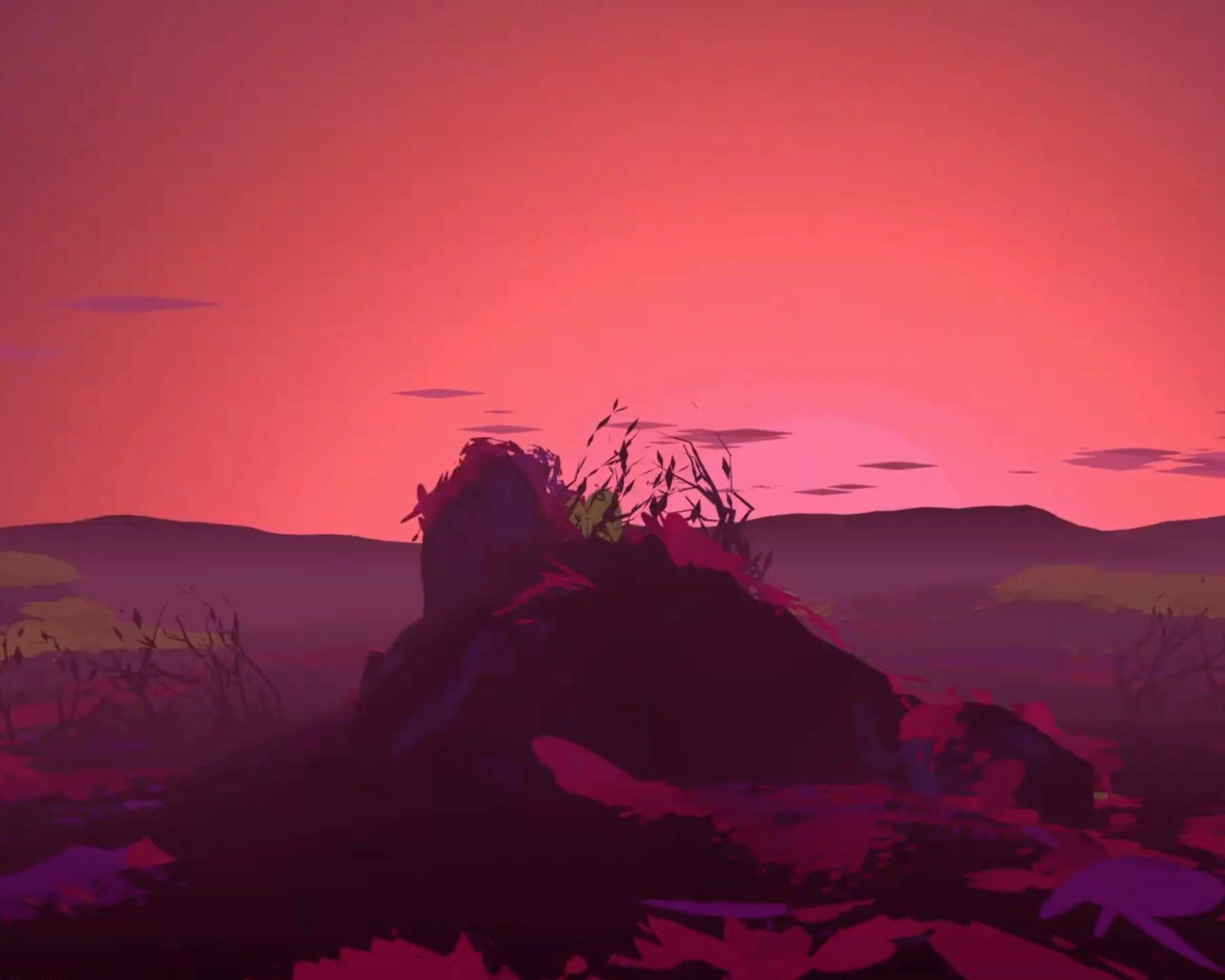
/ Iceland in saturated colour.
I think the answer is amor mundi, a wonderful Italian expression meaning love for the world. In Reversal, I bring together the things that make us want to hold on to the world rather than destroy it: a human connection, the loving gaze of someone you love, a dance, which is perhaps the most lifelike thing, the natural world, the face of a child.
So how do we stop ourselves? Especially when we have weapons such as nuclear bombs. These aren't the weapons of 1945, used in Hiroshima and Nagasaki. Today, a single bomb could erase a country the size of Portugal. The decision-making window is around ten minutes. What do you do in ten minutes? What might stop you?
These simple things, when you recall them instinctively, remind you that you wouldn't want to destroy the world. It's fabulous. That this world is fabulous. It's, in fact, quite marvellous.
“You can't reconsider everything you believe in during that time. That takes much longer.”
Did the immersive medium ever surprise you by transforming the images or taking the work somewhere you hadn't expected?
/LH/ Yes. I began as a photographer, and when you make photographs, you respond to what the world gives you. You arrive with an idea and a camera, but the world gives you something else. You respond to it, and you often end up somewhere close to your original intention, but not exactly where you expected.
I think that's true of any art form. Once you start making something, either the world or the medium pushes back. A lot of magical things happen in that friction. Mistakes happen too, and you have to learn to tell one from the other.
Creating a world in VR is both incredible and difficult because you're responsible for everything. You build it from scratch, and I found that challenging. We're not gods; we can't simply create a world out of nothing.
How did you build the world of the trilogy?
/LH/ I started by collecting images, although initially I had collected sounds. For Last Whispers, and later Reversal, I built a library of photographs of trees. Forests are very present in both chapters, and I've always loved photographing trees, particularly those with exposed roots.
/ Iceland in saturated colour.
However, I don't try to reproduce reality through straightforward photogrammetry. I start with something real but then stylise it. I think that's often more effective because the brain then doesn't have to keep recalculating the uncanny valley. It makes a leap of faith, while still recognising human movements rather than synthetic or digital ones. There are strange imperfections that only a human can make, and we can believe in them.
I also collected images from the Hubble telescope, transformed them into black and white, recropped and reimagined them. There's a lot of outer space in the work because I made a connection between the death of a language and the death of a world. I was creating images around that metaphor of a supernova, and from there we began building a three-dimensional interpretation.
The starting point was analogue, which is why the result doesn't feel so synthetic. In Reversal, the scene Dance of the Souls, we used real dancers and human bodies moving in 360 degrees. We built a contraption and worked with motion capture at Charlie Chaplin Studios in Los Angeles. I enjoyed that process enormously.
The same applies to the music. It was either written by us or built around an oratorio of extinct and endangered languages. Everything has a real-life origin: human, body and voice, human mind, real animals and real forests. The technology is the only synthetic element, and it's there to transform those materials so that you can step into the world—inside the frame. I think that's what makes it feel familiar, even when you're in outer space. Human beings aren't zeros and ones. At least, not yet.
Was it difficult to find the right people to help bring the work to life?
/LH/ I was incredibly lucky. I came across Jon [Jonathan Yomayuza] almost by chance. I received a small grant at the beginning and wanted to make a test. That test became a seven-minute piece that premiered at Sundance in 2019 and eventually became the finale of the first chapter.
Based on that test, we received a larger grant from the Marilyn and Jim Simons Foundation, which allowed us to build a bigger team and complete the work. The grant was modest in comparison with corporate financing of a project on that scale, and my team is young and has families to support, so all of the money went to them. That's how it should be.
“I was fortunate to find the right people. Jon is a brilliant developer, and the collaboration allowed us to realise ideas that, otherwise, would have remained impossible.”
/ Lena Herzog
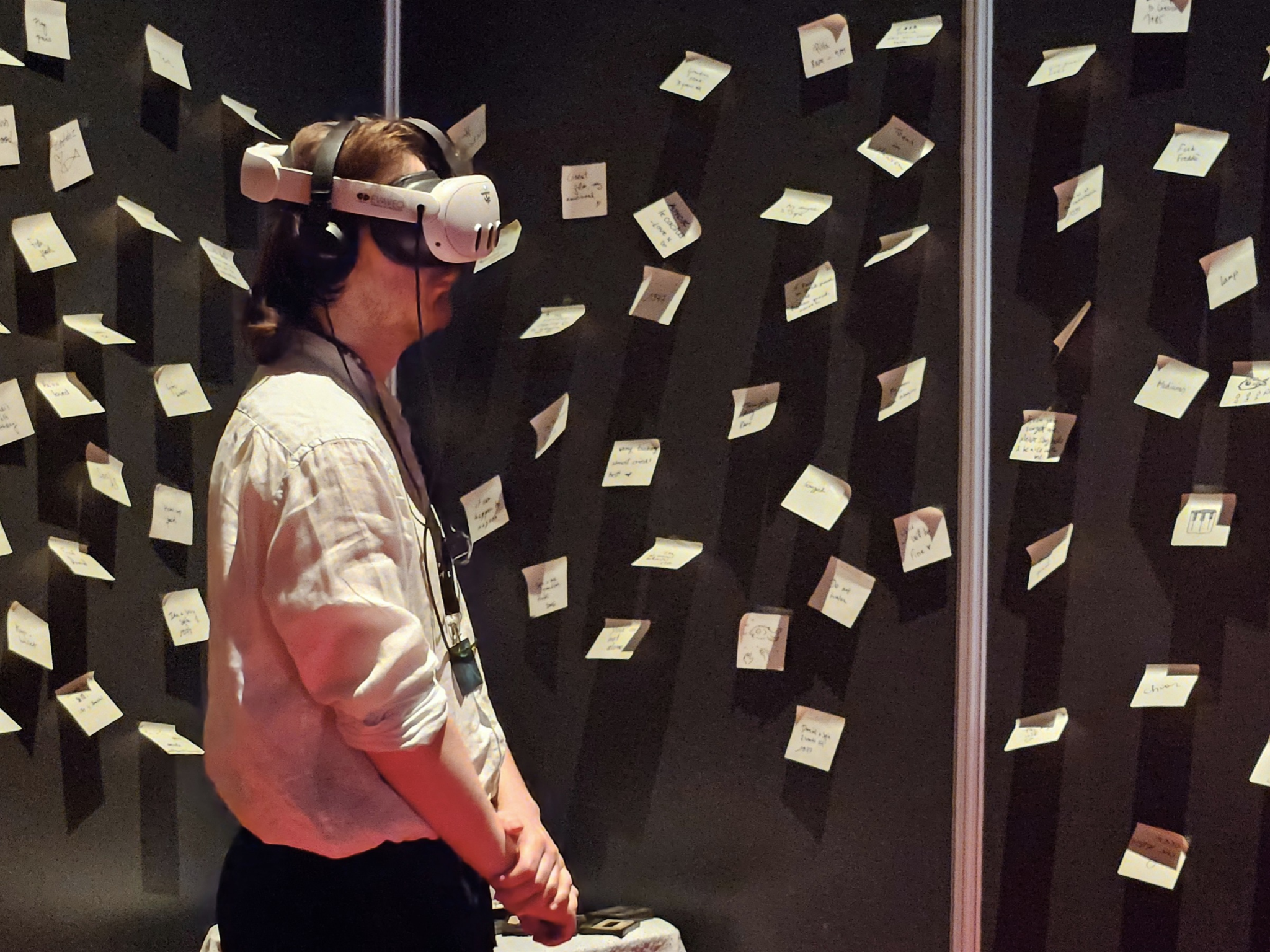
/ A Long Goodbye at the Salle de création, Bonlieu, during the Annecy Festival.
(Fresh Eyes)
Do you have a particular audience in mind when you make your immersive work?
/LH/ Actually, some of my favourite viewers are people who have never experienced VR. They're completely open and have no preconceived ideas about what it should be. Children loved it too. I showed them Any War Any Enemy last Christmas, and they really enjoyed being in VR. I was surprised. I like showing the work to people who are open to the experience and don't expect it to be a game.
“If it doesn’t [evolve], the medium may die.”
The work has been presented in festivals, galleries and museums, as well as music venues. Is it easy to navigate between those different spaces? Is there a particular kind of venue that suits it best?
/LH/ There is no distribution system for this kind of work. I have to invent one myself, which is incredibly difficult.
There is a distribution system for films. You make a film, and there's a way to get it out into the world. There's a system for publishing books, even if you self-publish. But there's no equivalent system for this. I think one will eventually evolve. If it doesn't, the medium may die, or remain confined to where it is now—a narrow circle of festivals. Someone needs to create a distribution system.
In my case, because the work is visual art, it was welcomed by art museums. Because it's also a work of music, it found a place in music venues, including in the opera house in Paris Théâtre du Châtelet and the Kennedy Centre's Terrace Theatre.
In the beginning of the show, we presented a video-art version and then the VR, and people were curious and wanted to put on the headsets. They reacted very strongly. In the end, I think it was that kind of a reaction that helped the work find its way into different spaces.
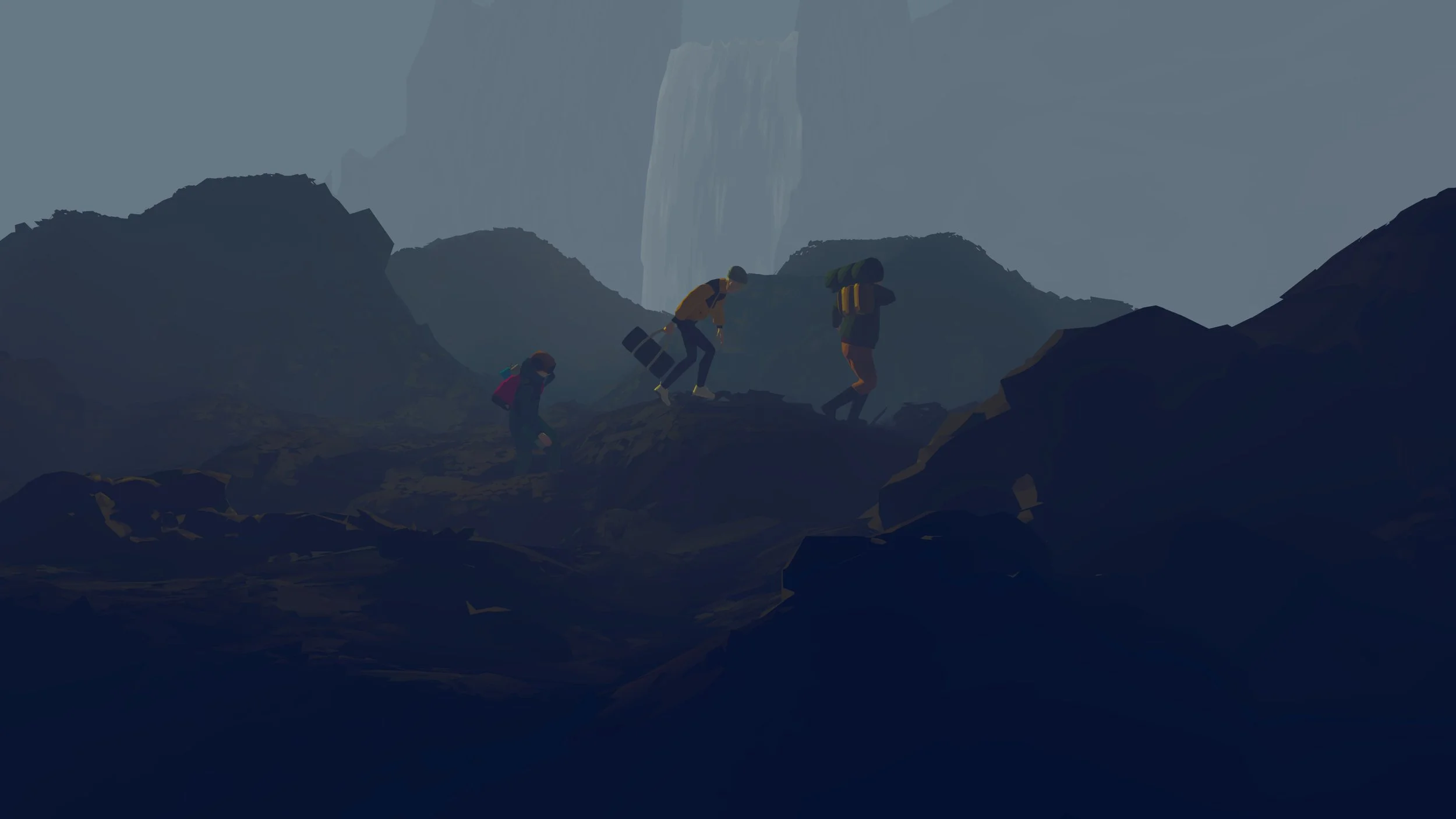
/ Trekking through unpredictable terrain.
Does the lack of an established distribution pathway affect your creative process?
/LH/ No. I make what I make because I need to make it. If it remains a secret, then that's what happens. I don't make work as a career move. I make it because it burns in me. Even if there were no outlet for it, I would still make it.
Now that you've completed the trilogy, do you already feel another creative need emerging?
/LH/ I'm going to take a break from it. I was just telling my colleagues that I envy photographers and painters. They make something, and that's that, they hang it on the walls. With immersive work, we have to bring the headsets and organise everything around the experience. It's an incredible logistical challenge.
What needs to change for immersive work to thrive?
/LH/ Headsets are still very clunky. My piece is an hour long, and that's a long time to have something the size of a shoe strapped to your face. But remember the first mobile phones? They were, in fact, the size of a shoe box. Now they're tiny, thin devices that hold everything. I imagine immersive glasses will evolve in the same way: they'll become lighter, with blackout so that everything is absorbed when you put them on, and with integrated headphones. We'll be able to access an entire world through something connected to our phones, where we can watch regular films, VR and everything else.
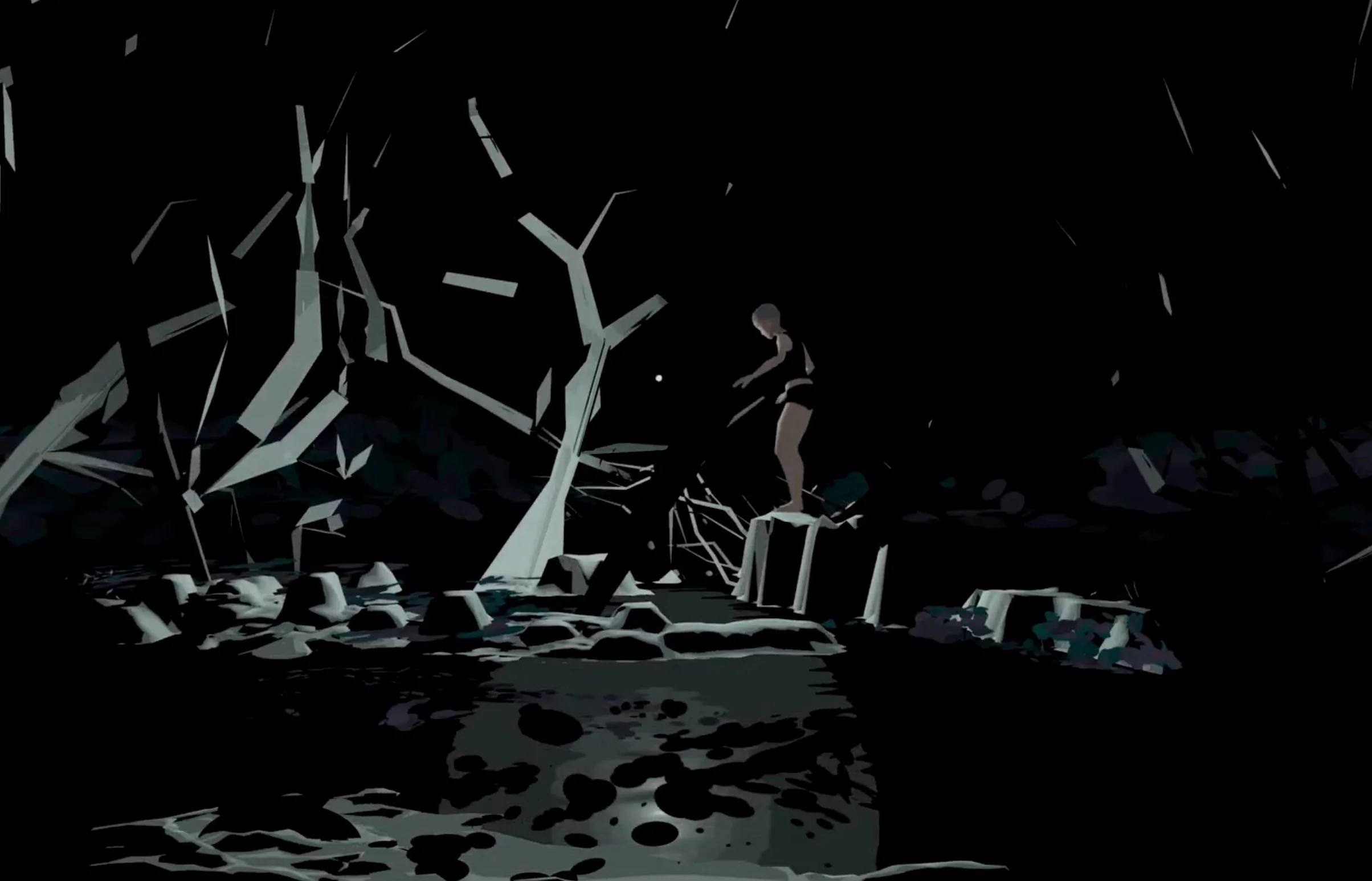
/ Into the dark, where time and nature move differently.
There's also the problem of how difficult VR is to engineer. Someone like Jon, an independent-thinking developer, can create things from scratch, but many people are restricted to prefabricated tools. As a result, projects can end up looking very similar. Building from scratch is incredibly difficult and counterintuitive. You're constantly fighting against the technology to make something happen.
People developing these platforms need to create tools that are smoother and easier to work with. And we need a distribution system for the work once it's made. Otherwise, the medium risks dying, which would be a shame. Done well, it's miraculous. I still have an almost childlike sense of wonder when something works in VR. There's nothing quite like it in cinema, books or painting. Nothing like it.
It was a pleasure learning more about Lena’s process and how she brought this trilogy to life. We agree that trying VR for the first time is a magical experience: the room you are in suddenly expands into new dimensions, and it touches you physically in a way that changes your perception.

What stays with me is the partnership between artists from other fields and developers willing to build from scratch, as Lena did with Jonathan Yomayuza. It is how the medium’s boundaries get pushed, and why I am curious to see what immersive work becomes next.
/ TRINITY: An Immersive Lament in the Age of Extinction. Lena Herzog, United States, 2026. VR: 70 min.