

GOODBYE
(07)
A LONG
FADING MEMORIES.
A LOVING VOICE.
A WATERCOLOUR LIFE.
The following answers were given jointly by Kate Voet and Victor Maes. This interview has been edited for length and clarity.
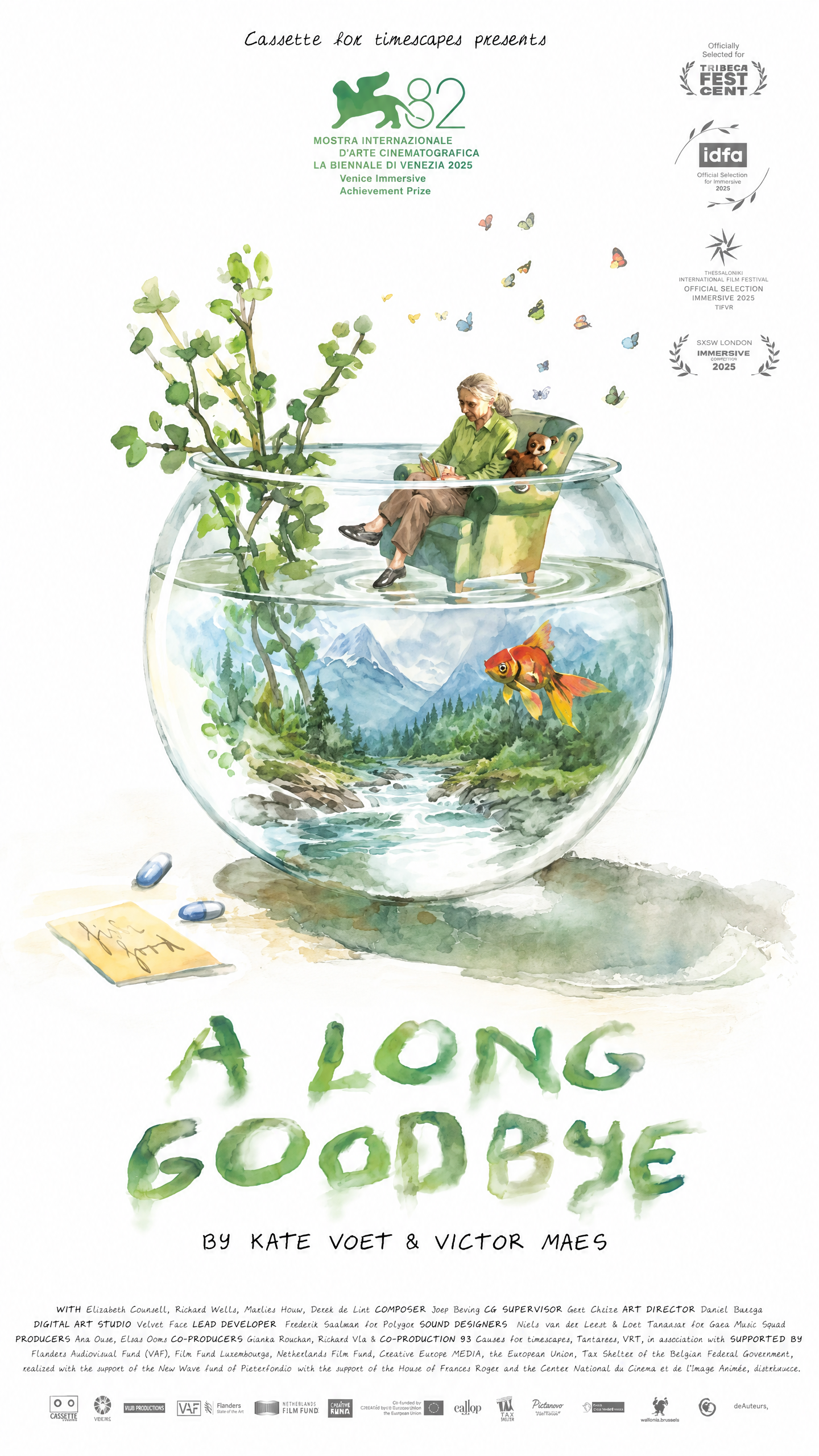
The theme of A Long Goodbye is a painful one. Anyone with a personal history with dementia knows the toll it takes, both on the person living with it and on the family and carers who love them deeply. It is an animated VR experience about love and dementia, told from Ida’s point of view. She is a pianist whose world appears and disappears around you in watercolour scenery, as scattered post-its and voice recordings of her husband slowly piece her memories back together.
Kate Voet, a director and screenwriter, and Victor Maes, a cinematographer and director, came to VR through a development lab launched by the Flanders Audiovisual Fund (VAF) during the pandemic. Their approach is rooted in filmmaking, with emotion taking precedence over technology.
AN ANIMATED VR EXPERIENCE ABOUT LOVE AND DEMENTIA.
How did you first encounter VR, and how do you describe your work to people outside your field?
/ VICTOR MAES & KATE VOET / We are first and foremost filmmakers. Depending on the project, our work involves directing, screenwriting, and cinematography. During the pandemic in 2020, the VAF (Flanders Audiovisual Fund), our local film fund, launched a development lab for film directors interested in exploring virtual reality. Over six months, we were guided by Yvonne van Ulden and David Calvet, who shared their expertise and helped us lay the foundations for A Long Goodbye.
Although the project uses different technology and methodologies from cinema, we always approached it as filmmaking. At its heart, both can be the same, particularly when you're creating a cinematic, narrative VR experience. Emotion had to come first, technology second. I think the reason the project resonates so strongly with audiences is the characters, their story, and the way we designed emotion throughout the experience.
We directed it much like a film. What will the viewer feel when they see this? How can we bring those emotions to the surface through the mise-en-scène, the flow, the pace, the sound design, and the actors' performances?
What makes VR beautifully unique is its interactivity. We chose the medium because it allowed audiences to step into our protagonist's experience rather than simply watch her story unfold on a screen. It gives them a glimpse of how dementia can be experienced from within.
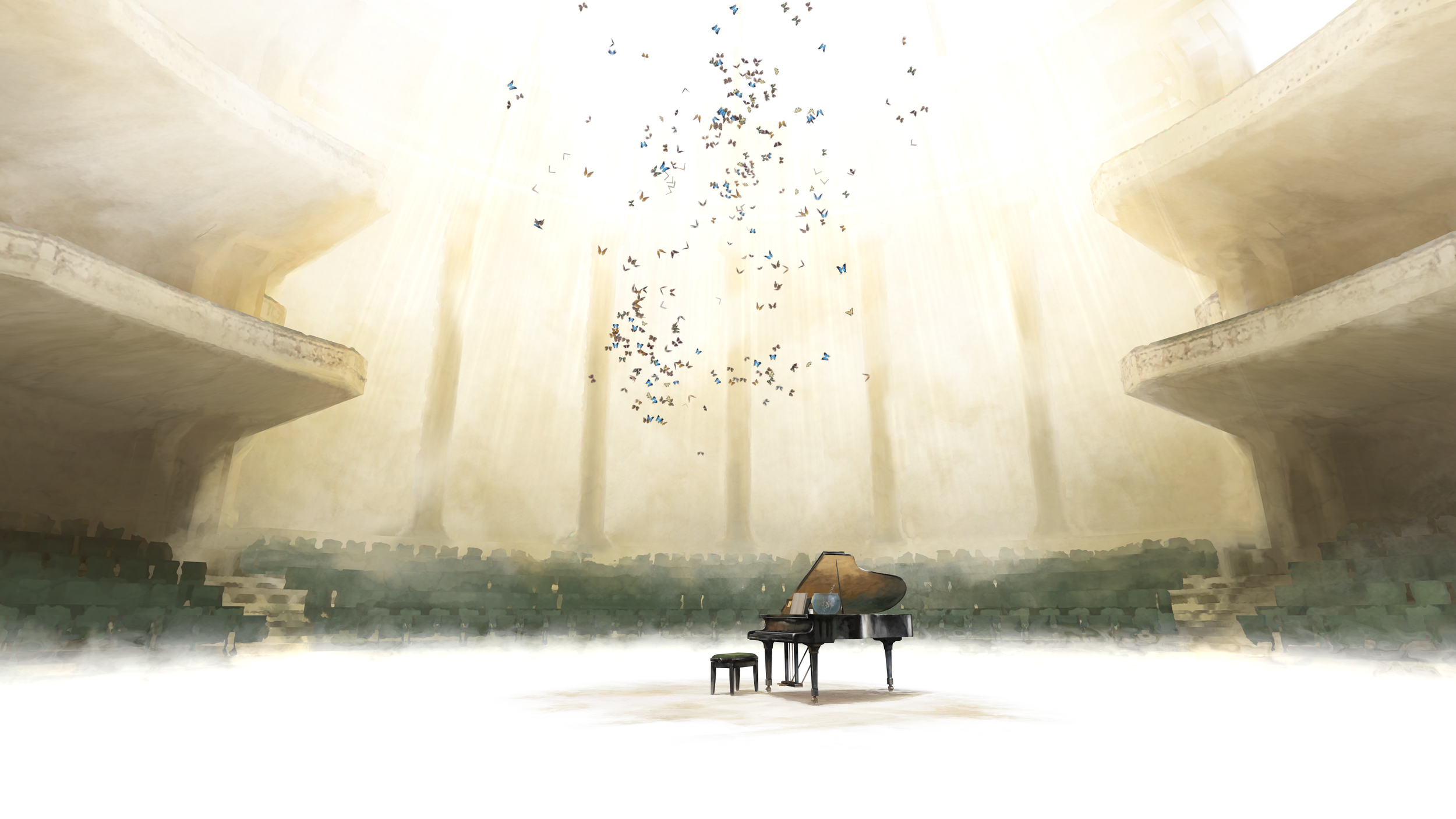
/ The concert hall, where Ida’s music fades to silence.
How did you develop the universe of A Long Goodbye?
/VM/ Ida's emotional journey needed to be at the centre of the experience. We created an intimate universe through many small details. Audiences discover Ida through voice recordings her husband made of their conversations, but also through environmental storytelling. You can pick up the many post-its that help her navigate daily life, as well as notes and family photographs that draw you into her world.
We based the story on my personal experience with my grandfather, alongside conversations with experts and caregivers. Ida's passion for piano music and Daniel's love of botany and nature are present throughout the scenes, creating a sense of belonging as you explore the universe.
We always envisioned a tactile, fragile, nostalgic watercolour world that appears and disappears before your eyes, reflecting life and the fleeting nature of memories. Our talented team — art director Daniel Balage, CGI supervisor Gael Chaize, developer Frederik Smolders and the animation team led by Pieter Vanluffelen — did an extraordinary job bringing this universe to life. They created the feeling of stepping into a living painting.
How do you navigate the line between staying true to your idea and refining the audience experience?
/VM & KV/ From the writing stage, we knew we wanted to create a love story between an elderly woman living with dementia and her husband, who is her caregiver. We wanted to foster empathy and understanding of the condition, so the emotional intention was always at the core of the project.
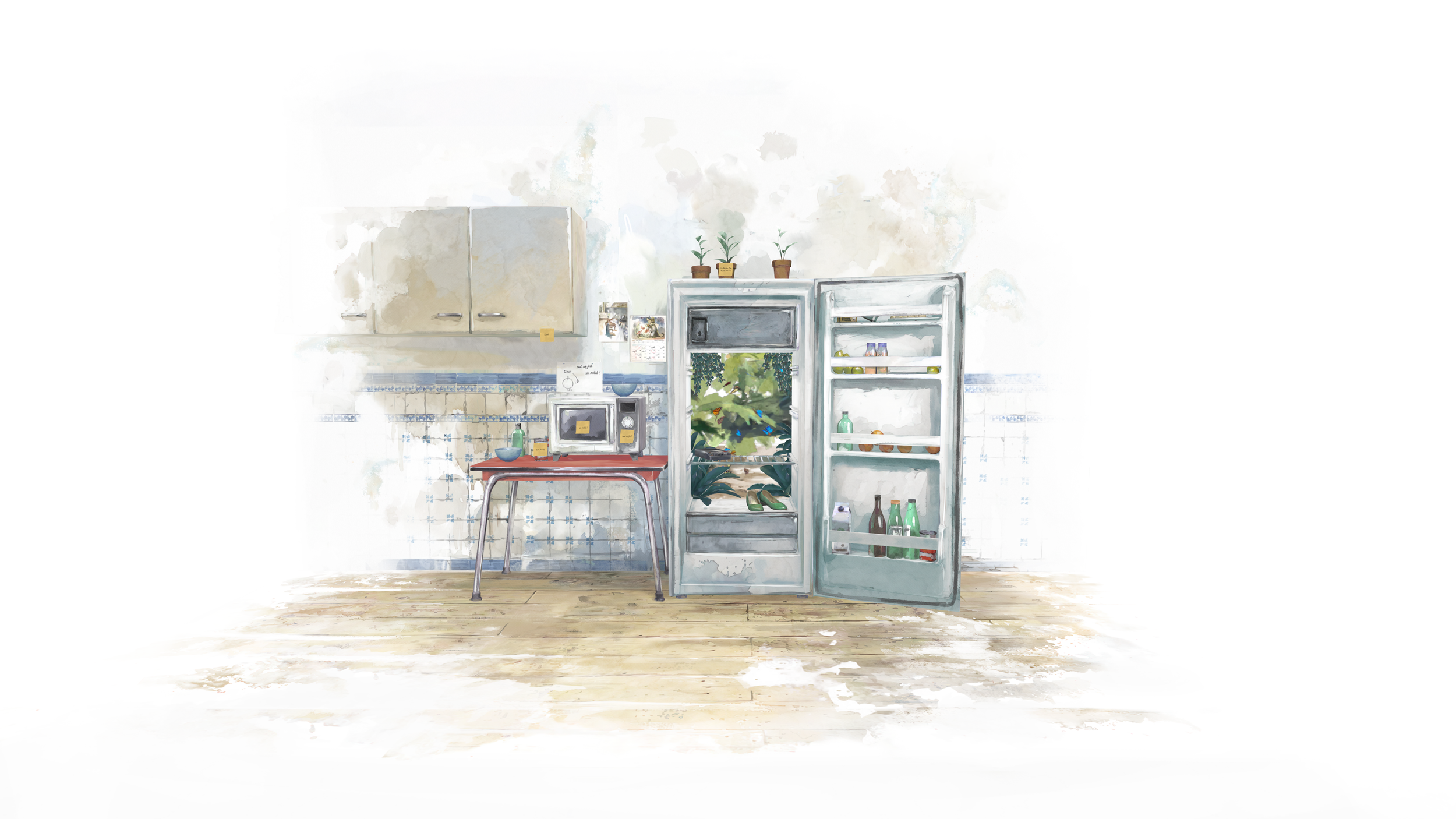
/ A kitchen where memory and imagination blur.
Thanks to the experience of our team leads we only needed to make minor changes after a playtesting session that IDFA had generously organised for us. Combining their expertise with our own experience as directors helped us make the right choices for the audience.
Developing for VR also gave us the opportunity to playtest, something we weren't used to doing in cinema. However, the high production costs of virtual reality mean creators need to think things through as early as possible, particularly during prototyping and scriptwriting. Once production starts, adapting a project during playtesting can become financially challenging.
Our first scene functioned as a prototype. Skipping the vertical slice stage was a risk, but we had a wonderful, talented team who translated our vision perfectly. The key was to think things through together, conceptually, before moving into creation and implementation.
How did you decide how much interaction to include?
/VM & KV/ Interaction allows audiences to immerse themselves in the reality of our 72-year-old protagonist, Ida, a pianist living with dementia. We developed scenes around different aspects of that experience, including nostalgia, confusion, fear, and confabulation.
It was important that every interaction had an emotional purpose rather than functioning as a gimmick in the gameplay. Each action should bring the audience closer to understanding Ida's experience, so we carefully considered the right amount of interaction in each scene.
We designed the emotional flow of the experience by anticipating how audiences might feel as the story progresses. At the beginning, we use interaction to introduce them to the universe and teach them how to navigate it. In the most emotional scenes, there is often less interaction, followed by calmer moments that allow for contemplation and invite audiences to think about their own lives and loved ones.
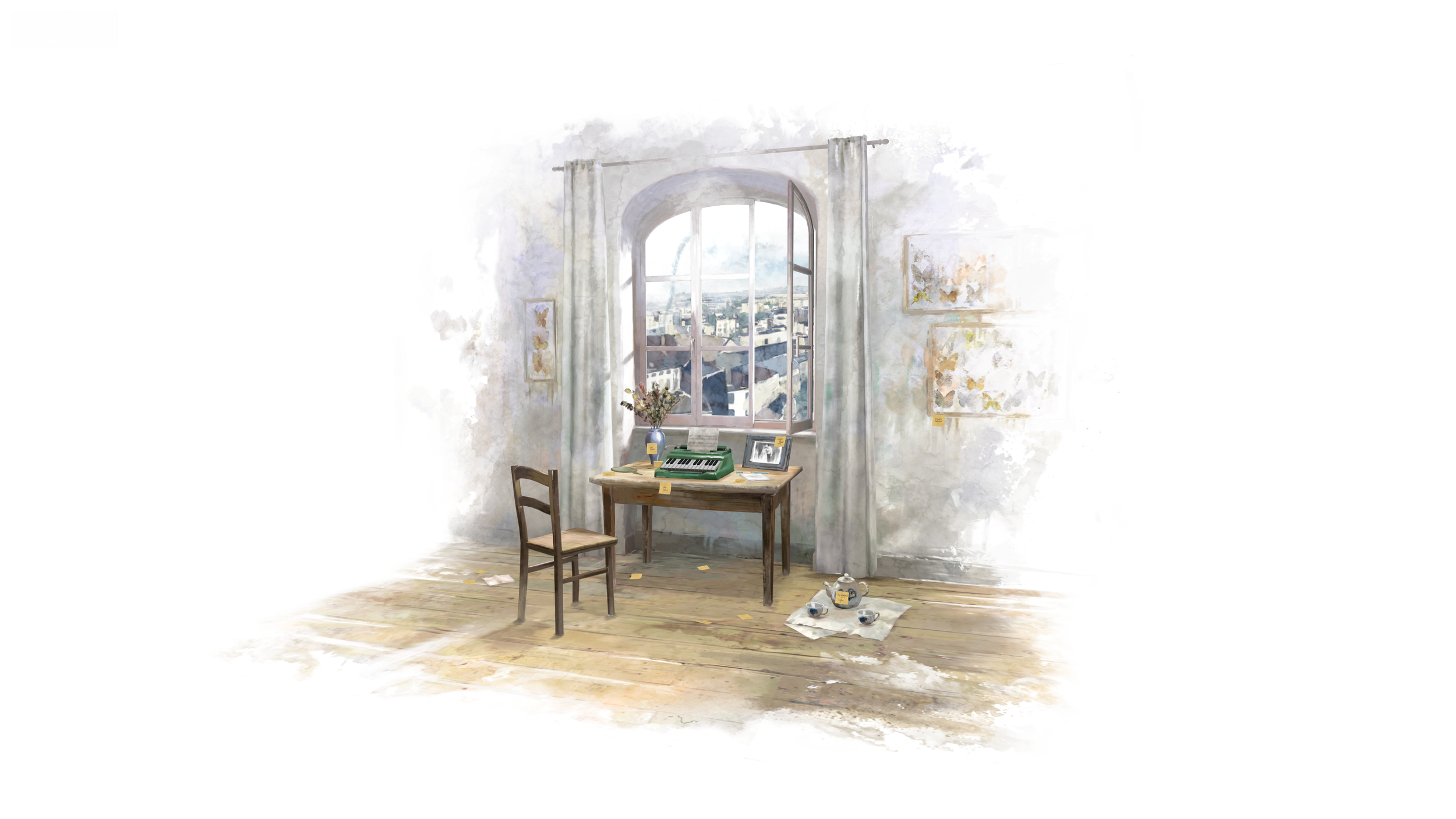
/ An apartment slowly painted into being.
One of the most beautiful pieces of feedback we received came at our premiere in Venice. An audience member told us he felt as though he knew Ida personally. We believe the level of detail in the story world contributes to that feeling, but the way we direct interactivity plays an equally important role.
Did this project open up new ways of engaging with audiences?
/VM & KV/ Absolutely. As filmmakers with a background in conventional cinema, we're used to presenting stories on flat screens. With A Long Goodbye, audiences became much more emotionally engaged because they stepped into the protagonist's perspective and came incredibly close to her reality.
We wanted to create a powerful impact, but we couldn’t have anticipated how strong the reactions would be. VR screenings are more intimate because fewer people can experience a work at once, which limits distribution income and reach. We underestimated how much smaller the audience for A Long Goodbye would be compared with a conventional film. At this stage, the XR field still feels more like a close-knit community than a fully developed industry in that sense.
But there’s something beautiful about that intimacy. In a cinema, you face a large, anonymous audience; at a VR venue, you meet people directly. When they take off their headsets, you make eye contact and feel an immediate emotional connection. Many are moved to tears, and we and our producer An Oost often find ourselves comforting them. Sharing our own connection to dementia while listening to theirs means a great deal to us.
How has your approach to distribution developed?
/VM & KV/ Our producer, An Oost at Timescapes, and our distributors, initially Astrea and now Unframed, focused first on the festival circuit, a great way to premiere a project in different countries and generate visibility. We’ve since started expanding into healthcare, higher education, and nursing homes, so the work can have an impact where it matters most. We’re starting in Belgium, and have recently finished French, Spanish, Mandarin and Lithuanian versions to expand our reach.
We’d also like to bring it to museums and galleries, and we’ve even presented it in a concert hall alongside a performance by composer Joep Beving, who created the original music. The work lends itself to collective experiences and to discussion afterwards. Finally, A Long Goodbye will be released online for anyone with a Quest 3 at home.
“The work lends itself to collective experiences and to discussion afterwards.”
/ VICTOR MAES & KATE VOET
“There are simply not enough venues showing VR works.”
As audience members, what prevents you from experiencing more VR works?
/VM & KV/ Unfortunately, limited availability. Artistic XR is a vibrant but relatively small industry, challenged by high production costs and limited opportunities to generate income, particularly when compared with the film and games industries.
There are simply not enough venues showing VR works. Film festivals are essential: they offer valuable opportunities to meet audiences and promote projects, but they generally don't provide a sustainable source of income. Many artistic VR works never move beyond festival screenings, creating a cycle in which projects generate very little revenue despite their high production costs and years of development.
In Europe, film funds play a vital role in making projects like ours possible. We're incredibly grateful to have been able to travel so widely with A Long Goodbye and discover wonderful works from around the world. I'm hopeful that more venues will programme immersive projects in the future. Audiences who are new to the medium are generally excited about XR once they discover it.
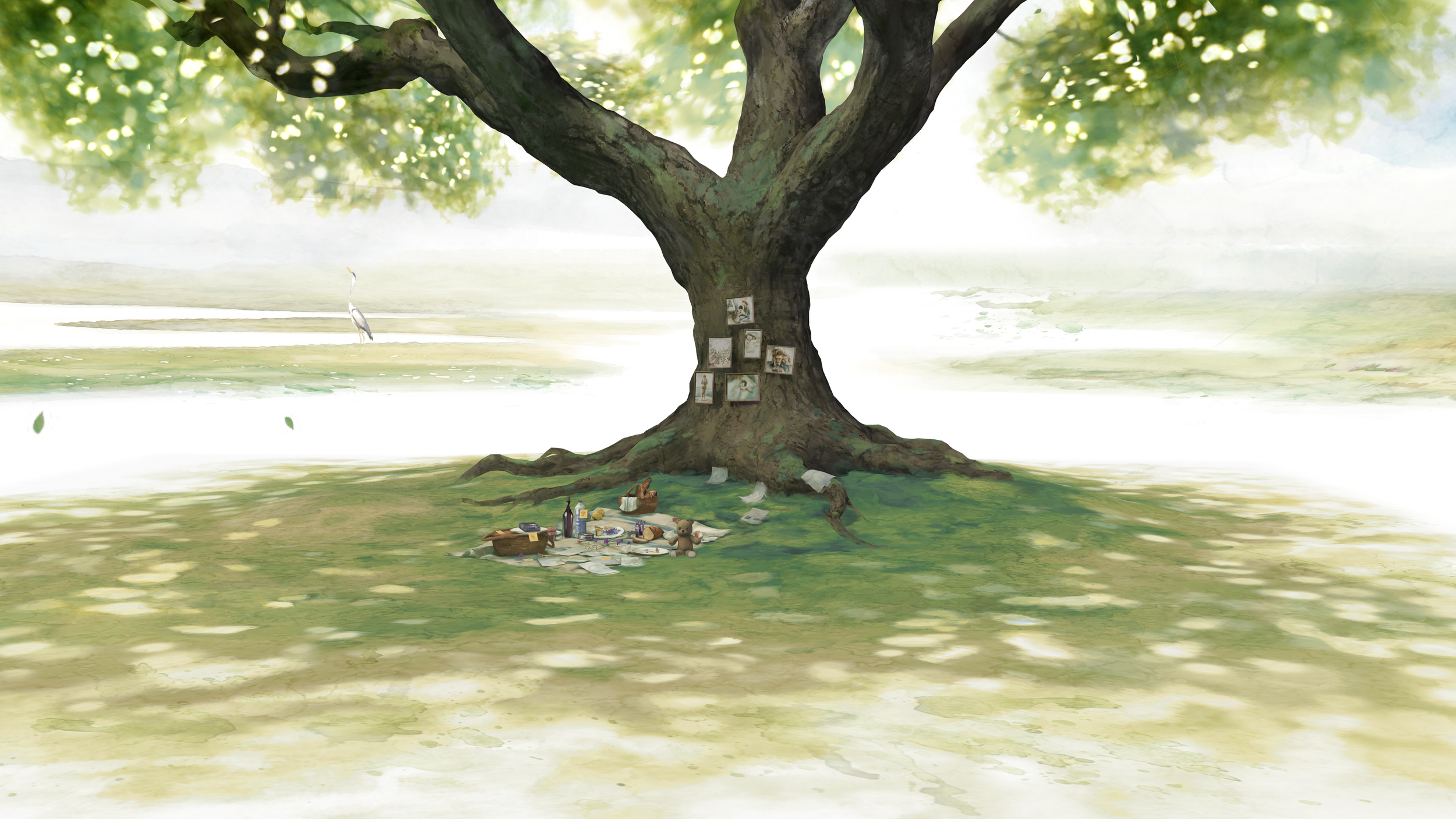
/ Memories pinned to a tree.
How did you find the collaborators for A Long Goodbye?
/VM & KV/ The collaborations came together quite naturally after the VAF development lab. Emmy Oost, who heads the production company Timescapes, had been Victor’s teacher at film school. Her sister, An Oost, leads their VR slate, and we took the project forward together once we decided to collaborate.
For others, I'd suggest finding your main collaborators first. If you're based in a region with a strong co-production culture, such as Europe, Canada, or Taiwan, look for artists and teams you'd love to work with and build a co-production strategy around them.
Watch as many VR works as you can and connect with artists whose work you admire. The industry is small, and most professionals are very approachable. It's a great way to build meaningful, lasting relationships.
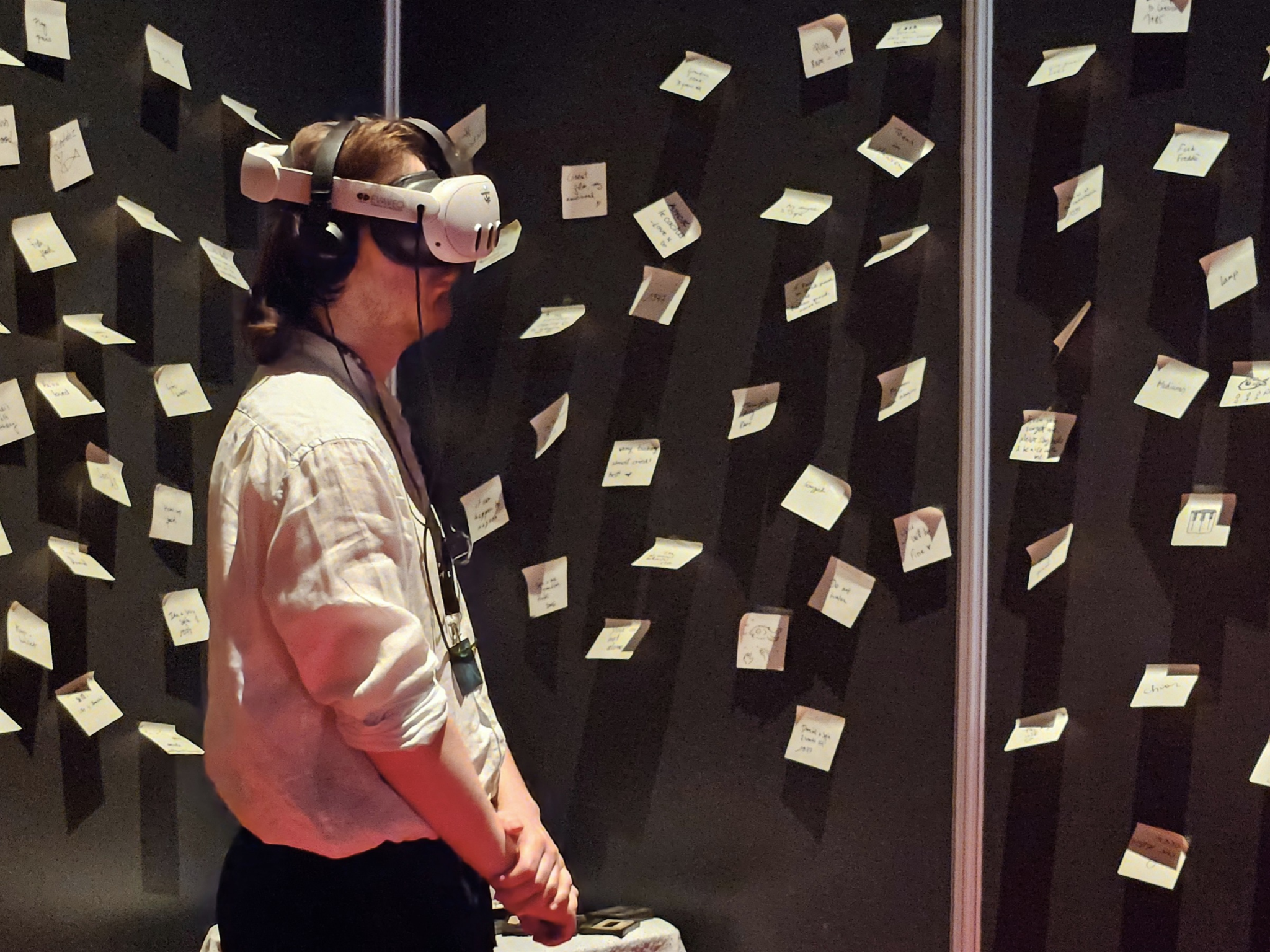
/ A Long Goodbye at the Salle de création, Bonlieu, during the Annecy Festival.
(Poetic tone)
Are there any XR works that have stayed with you or changed how you think about the medium?
/VM & KV/ The work of Michelle and Uri Kranot has been a great inspiration to us. Their powerful, beautiful VR pieces showed us how a painterly world could come alive, giving us the confidence to pursue that visual direction for A Long Goodbye. Their works are intimate, poetic, and truly artistic.
Notes on Blindness was another important inspiration, both for its poetic tone and its ability to create empathy around a specific medical condition. It brings audiences into the experience of a character who is gradually losing his sight, and explores how that affects him, his life, and the people he loves.
We would recommend these works to everyone.

At the Venice premiere, an audience member told the team he felt he knew Ida personally. The recognition has followed, from the Venice Immersive Achievement Prize to the Cristal for Best Immersive Work at Annecy to Best XR Film at Clermont-Ferrand and the Agog Immersive Impact Award at SXSW. Yet that a work capable of this can reach only a few viewers at a time, and that, as Victor and Kate note, many artistic VR works never move beyond festival screenings, is a problem XR needs to face and solve.
/ A Long Goodbye. Kate Voet and Victor Maes, Belgium, Luxembourg, and the Netherlands, 2025. VR: 30 min.