

ICELANDIC FOLKLORE. CIRCUS ARTISTS.
A WORLD SHAPED BY NATURE.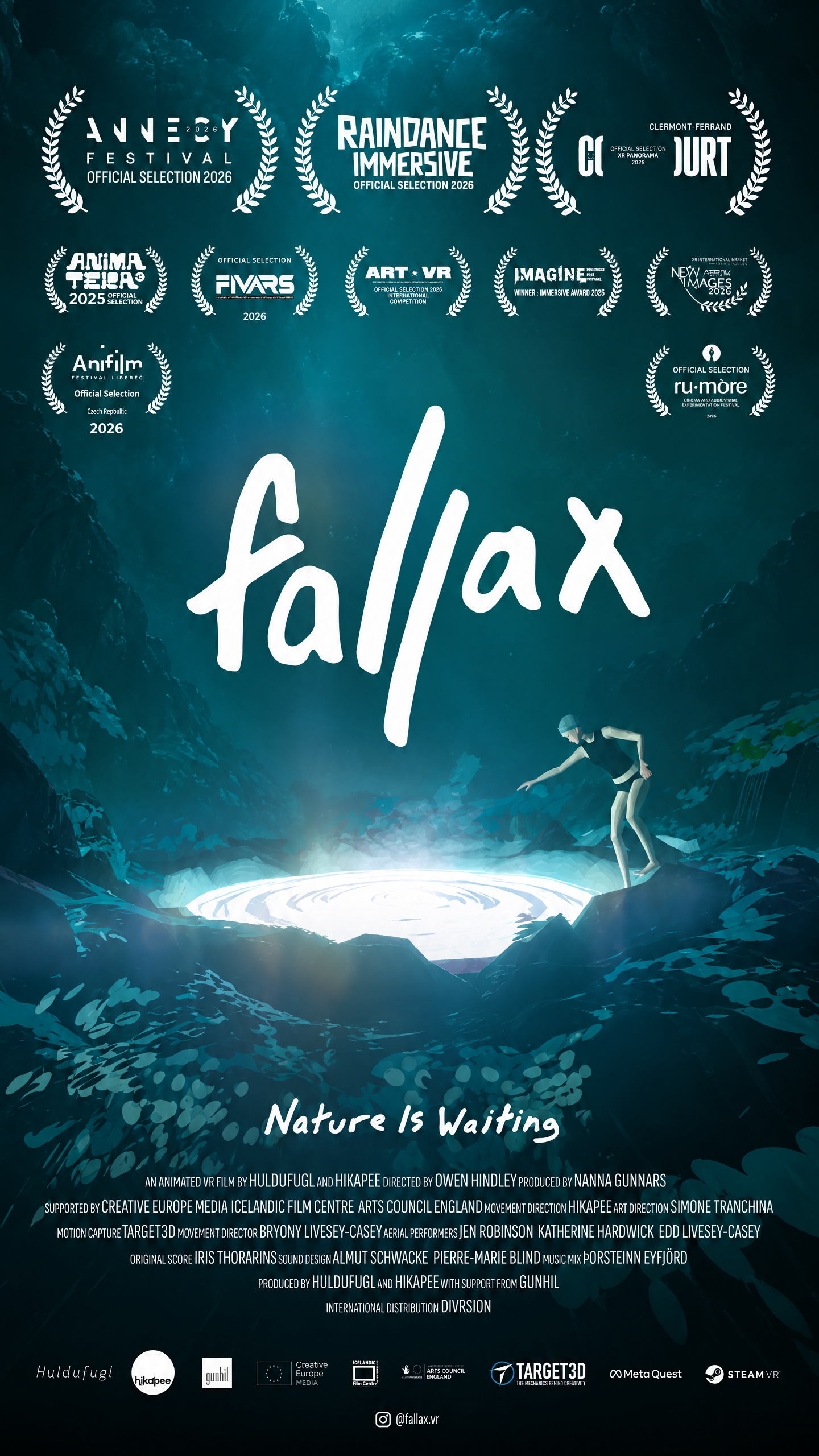
(06)
FALLAX
This interview has been edited for length and clarity.
I met Nanna Gunnars and Owen Hindley back in 2019 at Raindance Immersive and have been following their work ever since. Nanna is an Icelandic producer who created the XR section at RIFF; Owen is a British-Icelandic creative technologist. They are Fallax’s producer and director, respectively, and together founded Huldufugl in 2015, a company that moves between XR films, interactive theatre, stage shows, and street happenings. Their willingness to stretch the medium rather than settle into one format captivates me.
Fallax takes us into an eerie landscape where calm settles over us as we follow an escaped convict. Born from a circus stage show, it is a perfect example of how they bring different arts into XR.
THE COMMON THREAD THROUGH ALL THEIR WORK IS A WILLINGNESS TO STRETCH THE MEDIUM.
How did you first encounter VR?
/ OWEN HINDLEY / My first encounter was at a hack day in London connected to the music technology scene. That eventually led to a commission from Google, through a contact in Iceland. A group of friends and I set up a studio to create Horizons, a launch title for Google Daydream, which came out in 2016. It was a music experience made with Bonobo and other musicians, where you could move through tracks and influence how they progressed. It was really about music and interactivity.
/ NANNA GUNNARS / My first experience came through theatre. I wrote a two-hander play about a person trapped inside an invisible box, marked only by tape on the floor. Owen had already been working with VR and suggested it could be a good fit because of the limitations of the box. That became A Box in the Desert.
I came from a theatre background and had no idea what I was getting into. Suddenly, I was wearing a motion-capture suit and making huge movements because the system couldn't capture facial expressions. You couldn't jump, but you could bend down or make big gestures to show that you were live. It was a completely different way of performing. That was around 2017 or 2018.
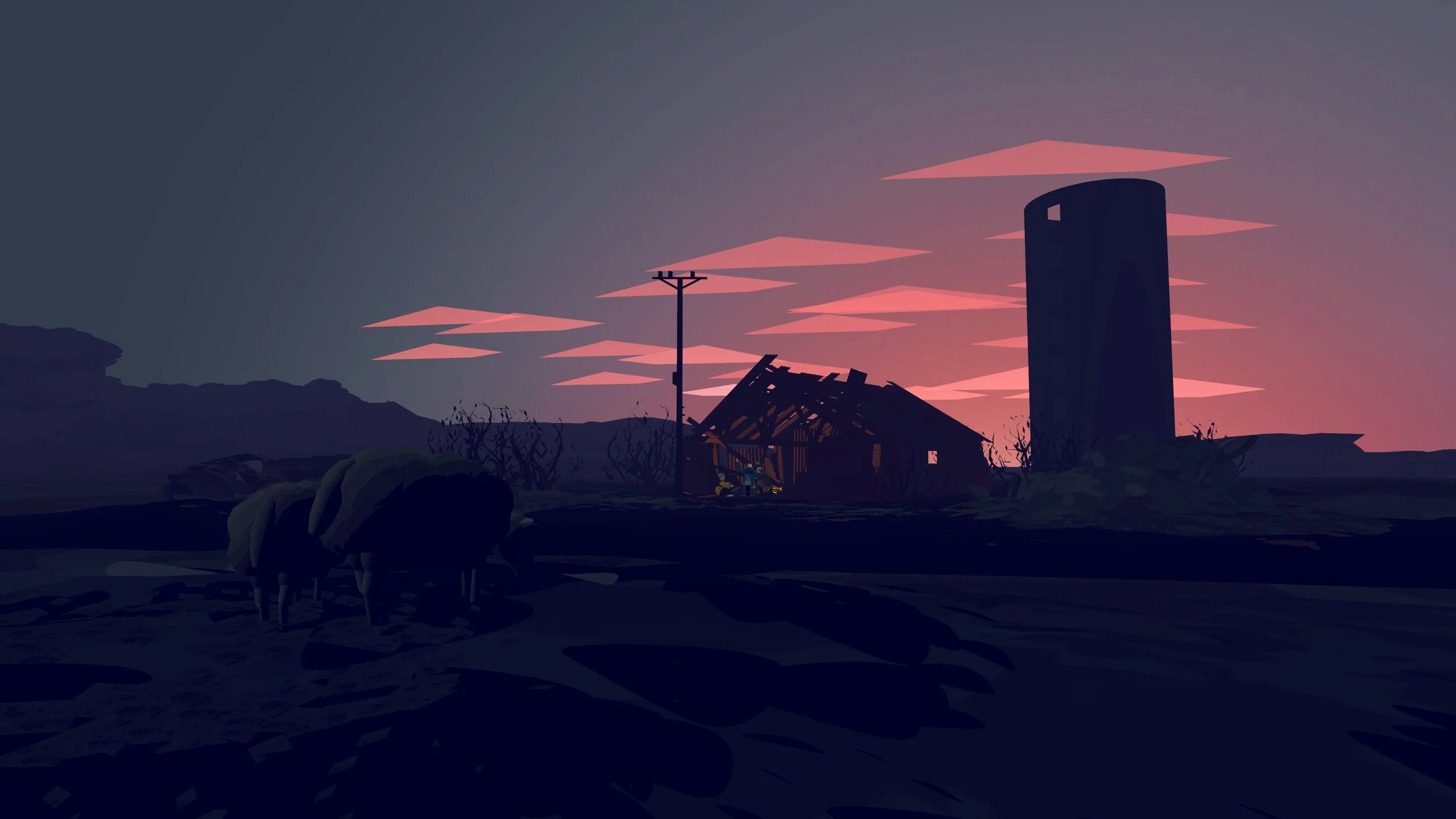
/ Shelter at dusk.
Is it difficult to explain your work to people outside the field?
/OH/ We've developed a few ways of explaining it. For Fallax, for example, we might say it's like watching theatre from the best seat in the house. That's a useful description for Fallax because it's a linear experience: you watch something unfold in front of you from the best possible position.
But we struggle to find one description that covers everything we do. We've made interactive live experiences for one audience member and then for five, and now we've made a film. We've also worked on light installations, circus and conventional theatre. We don't keep doing the same thing.
/NG/ People like to put you in a particular box. They'll remember that you were working on a circus show five years ago and assume that's still what you do. I tend to explain whichever project I'm working on at the moment, because it's difficult to describe such a varied practice in one sentence.
My mum is 80 and has experienced all our VR work, so she probably has a better understanding of VR than most people her age in Iceland! But even for her, each project is different. That's part of what makes the work exciting, and also what makes it difficult to explain.
How did you develop the world of Fallax?
/NG/ It began with a circus production called The Hidden People, which we were creating with Hikapee, a circus theatre company in the UK. It was a huge stage production, with several performers, a large crew, and a set that Owen was developing through projection mapping. I was performing in it, and we were co-producing it with our friends Bryony and Edd.
When COVID hit, we couldn't continue working physically together in the same way. Owen suggested making a film that wouldn't tell the same story as the stage production but would inhabit the same world. We received some emergency funding, and the four of us developed the narrative for Fallax together.
The film draws on the Icelandic folklore of the huldufólk, or hidden people. They live alongside humans, elves and trolls, and can be kind or dangerous. They're closely connected to the natural world.
/OH/ We wanted to set the circus production in Iceland, but we were conscious of the familiar image people have of the country: beautiful landscapes, dramatic colours and everything looking perfect. The Iceland we live in is often grey and rainy, and the landscape can be intimidating, particularly in winter.
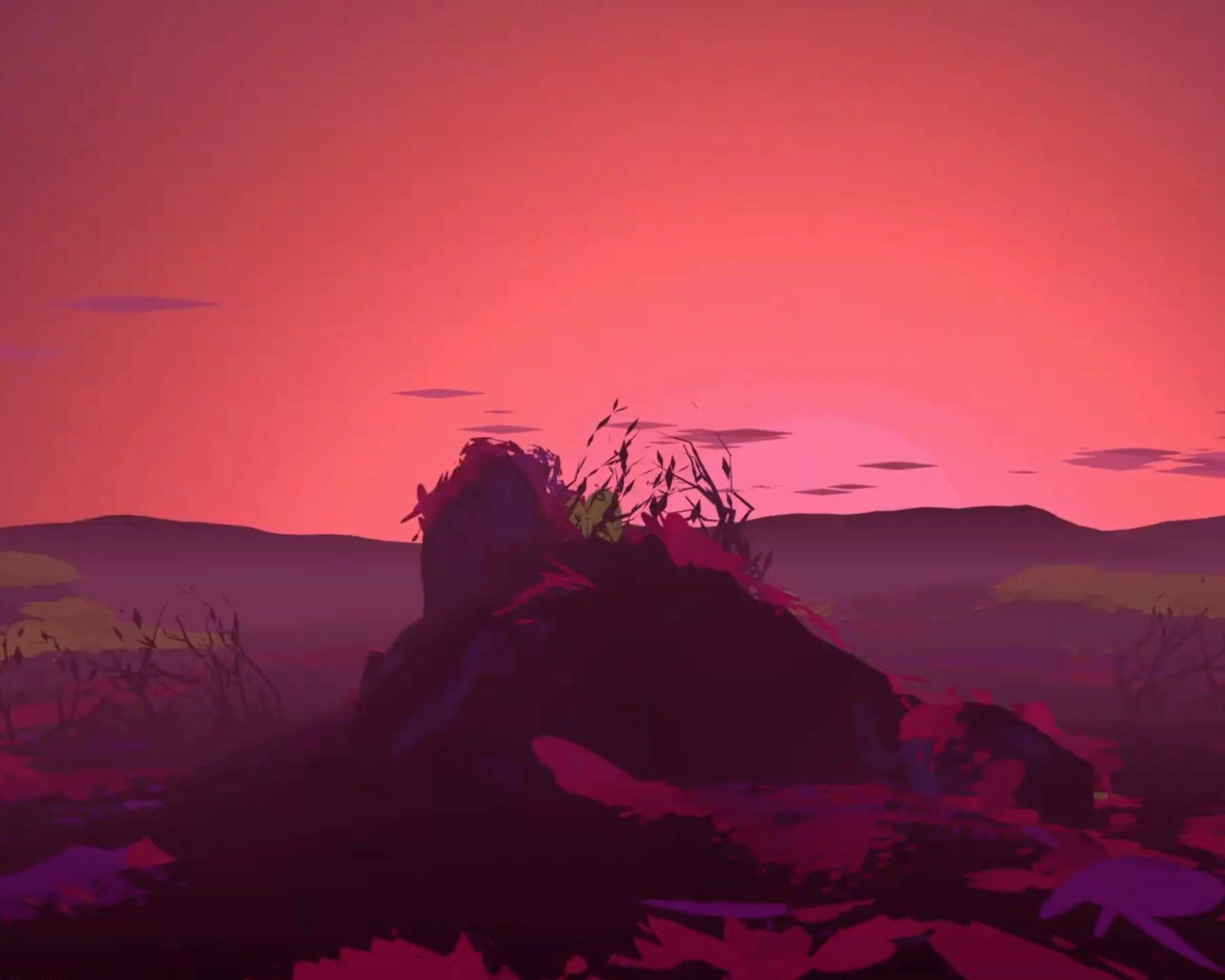
/ Iceland in saturated colour.
So we asked ourselves: what would the hidden people be like today? Traditionally, they were imagined as similar to humans, but better — figures to aspire to, but also to be wary of. We also wanted to explore what these figures might represent in relation to nature. In Iceland, you can go out for a walk on a beautiful day and suddenly find yourself caught in a snowstorm. People have lost their lives very close to safety because the weather changed so quickly.
I was inspired by the Icelandic painter Jóhannes Kjarval, who managed to capture the landscape in extraordinary colours. His paintings can look almost psychedelic, but they still feel unmistakably like Iceland. He reveals colours in rocks and landscapes that you might not notice at first. You recognise the place, but you see it differently.
I used procedural techniques in Houdini to develop textures, forms and geometry for the stage production. When we moved into VR, we had to reduce some of the detail so the film could run on a standalone headset rather than a high-end PC. That led us towards a more impressionistic, painterly style, which carries something of Kjarval's approach into the virtual world.
The story also evolved. Our circus collaborators initially wanted to make a story about the hidden people, and we worried that it might feel clichéd. These are familiar figures in stories about Iceland, particularly when outsiders arrive and become fascinated by elves and folklore.
Nature can be unpredictable, even dangerous. We wanted to explore that sense of nature as something that can mislead or overwhelm us, and to connect it with the consequences of how we treat the environment. In the background, there's a concern about climate change: what happens when we fail to respect the natural world?
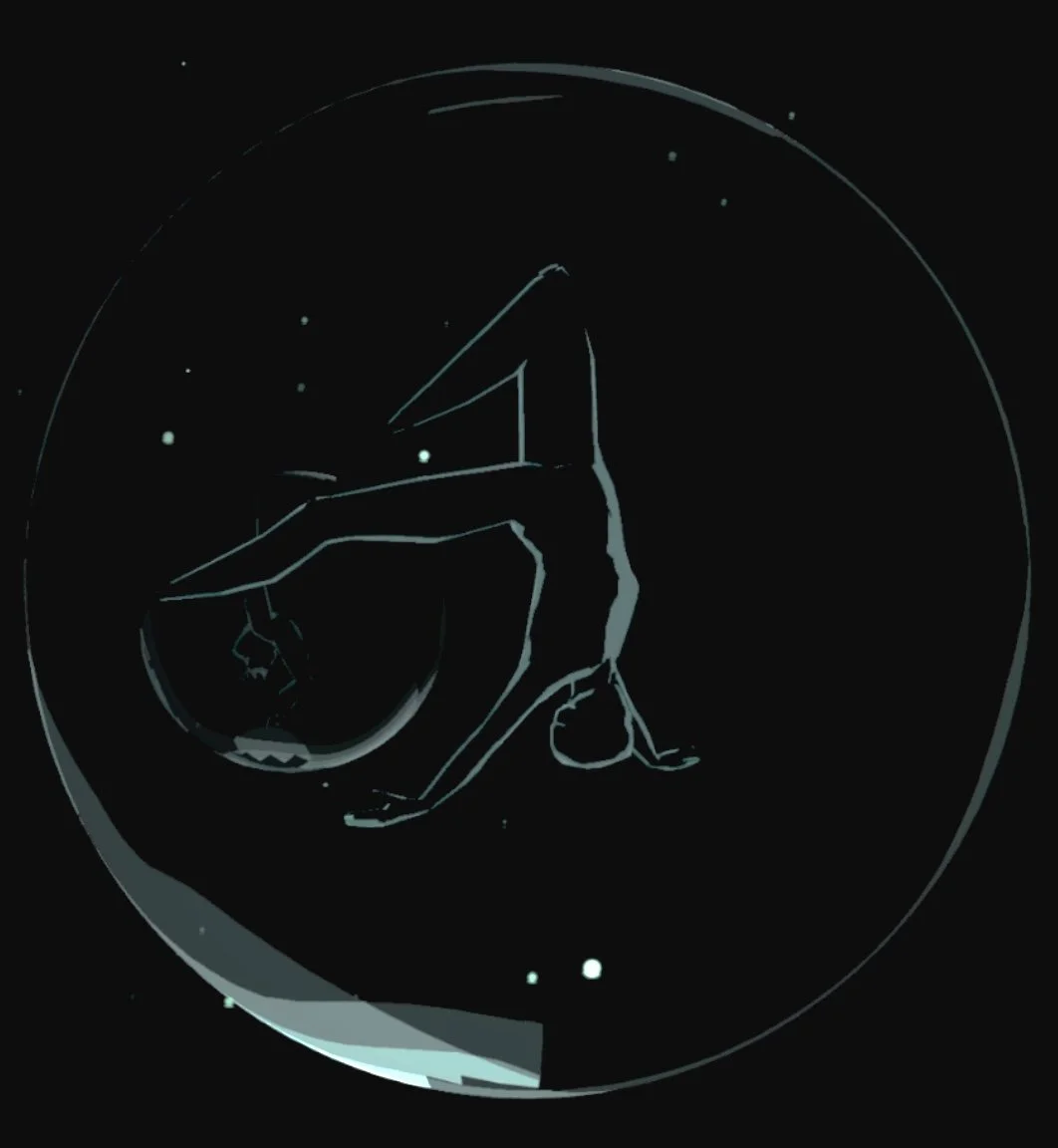
/ A water spirit, one of the elemental forces brought to life by circus artists.
/OH/ We also worked with GunHil, an Icelandic animation company that helped us navigate the film-funding system. We hadn't made a film before, and in Iceland the funding structures are still very much geared towards conventional filmmaking. The application forms ask questions that make sense for live-action productions but aren't necessarily appropriate for animation, let alone immersive work.
GunHil had gone through a similar process years earlier, when they were trying to establish animation as a legitimate part of the film industry. They understood what it meant to introduce a medium that funders weren't familiar with and helped us explain the project in terms the funding bodies could understand.
How did you approach the visual design and bring the different collaborators into the project?
/NG/ Our characters were designed by Simone Tranchina, an Italian 3D artist and art director we found online. There aren't many people working in VR in Iceland, and many of those working in animation are employed by larger companies. So we decided to look beyond our immediate network and find the artists whose work we really wanted to collaborate with. Owen had come across Simone through his work on Stranger Things VR, and his style was exactly what we were looking for.
Our sound designers came on board through recommendations from other artists. We had worked with our composer, Íris Thorarins, on several previous projects, and other collaborators came through personal connections. Some of us work in the same creative co-working space in Iceland, while others are based in Italy, Berlin, France and the UK.
It's been a mix of local relationships and international collaboration. We've been very lucky with the team. Everyone has been excited about the project, and I think that matters enormously when you're making something together. You want people to enjoy the process and feel invested in the work.
Unlike some of your earlier works, Fallax is a linear VR film. How did you decide how much interaction to include?
/OH/ Most of our previous projects depended on people interacting verbally and physically, and they often required a live performer and a lot of technical and human infrastructure. That can create incredible connections with audiences, but it's also very labour-intensive and exhausting to tour with.
With Fallax, we wanted to go in the opposite direction. We had a linear narrative we wanted to tell, and that gave us the freedom to focus on the visuals, the storytelling and the atmosphere.
Some of the most impactful immersive works I've experienced are linear. Notes on Blindness and Battlescar, for example, show how powerful a work can be without giving the audience lots of choices. It's what you do with the medium that matters.
“We wanted to see what we could achieve by working differently from our previous projects. That doesn't mean we're abandoning interaction. It's more about learning from one approach before moving on to another.”
/ Nanna Gunnars
“You notice what you want to do differently next time.”
What have you learned from making Fallax that you might take into your next project?
/NG/ You learn something from every project, whether it's about visual style, lighting, or the way you organise production. You notice what you want to do differently next time.
From a producer's perspective, I felt much better prepared for this project after the disruptions of COVID. We had planned to take Parallel People around festivals, but things didn't happen as expected. This time, having a festival strategy and a list of people to meet has started to pay off.
We've been accepted into 15 festivals with Fallax so far, and we've found a distributor. I'm learning how to navigate festivals and markets, when to arrange meetings in advance, and how to make the most of being there. At the beginning, I would arrive and think, "This is amazing” — but I didn't necessarily know what I should be doing.
It's a learning curve, whatever side of filmmaking or immersive production you're on. You try to do things better next time, even though the next project might bring its own failures. You still learn.
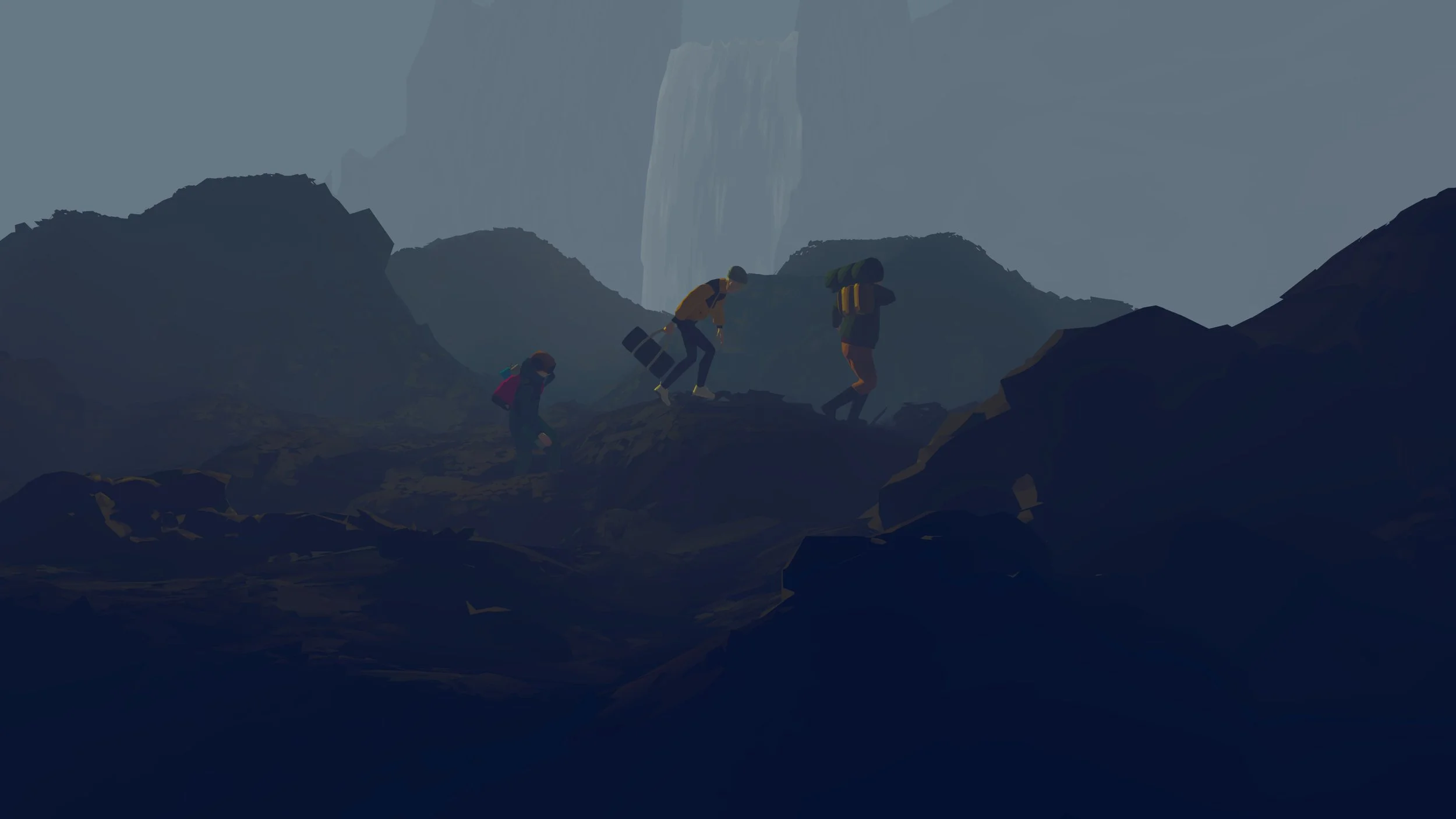
/ Trekking through unpredictable terrain.
“WHEN WE ATTEND FESTIVALS, WE MAKE A POINT OF SEEING OTHER WORKS, PARTICULARLY THOSE IN COMPETITION.
Do you use VR for entertainment yourselves?
/OH/ A little, but accessibility is an issue. Some of the works we're most interested in aren't available yet. We tend to spend more of our time and money going to theatre performances or art exhibitions.
When we attend festivals, we make a point of seeing other works, particularly those in competition. We also go to events such as the ones from A MAZE., which bring together games and other digital experiences. It's a good way to see what's happening and meet the people making the work.
Has there been an immersive work that changed the way you think about the medium?
/OH/ Battlescar (Nico Casavecchia & Martín Allais, Atlas V) had a big impact on me, particularly in its animation style and use of depth. I'm also inspired by the work of Tender Claws. Their pieces are visually fluid, and the interactions feel graceful and simple, even when the underlying technology is extremely complex. I love the way they approach their work.
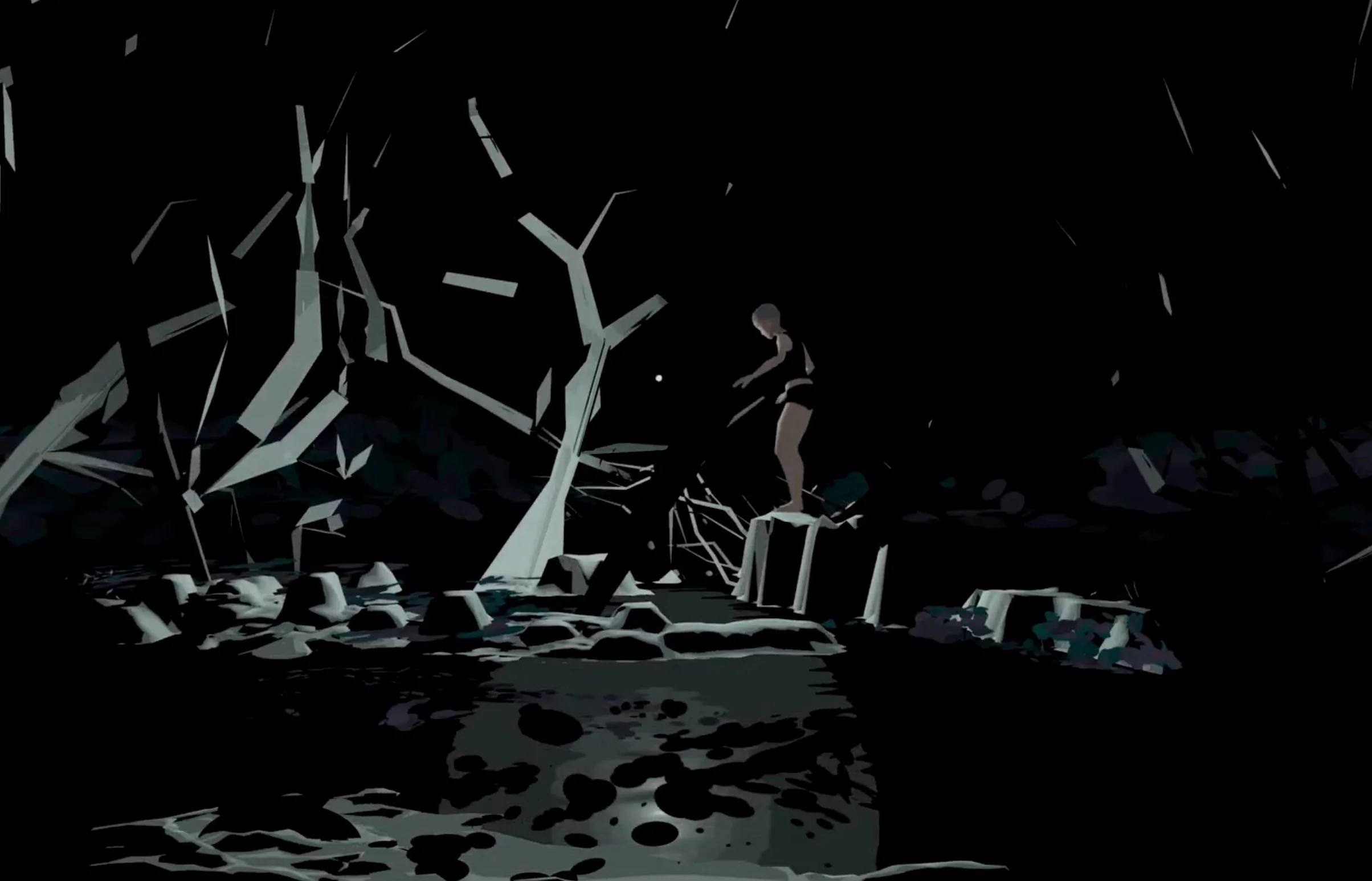
/ Into the dark, where time and nature move differently.
/NG/ I was really inspired by The Islands of the Shells (Chang, Wei & Ko, DirtyWorks) because it doesn't rely on a single medium. It combines live action, puppetry, animation, and cut-out elements, and moves between interactive and non-interactive storytelling. It shows how many different approaches can coexist within VR. It's also a beautiful and emotionally powerful story.
I recently saw a student work in progress about being trans and going through the process of transitioning. "Becoming Lucien" (Lucien Pin, Morituri) combined information with something closer to lived experience, and I was particularly interested in how it moved between scenes. It felt calm and informative while still being a form of storytelling. I'm looking forward to seeing how that work develops.
There are so many different ways of working in VR, and every strong piece leaves you with something. You see something and start thinking: what if we tried that? Or how could we approach it differently? That's part of what keeps us experimenting.

Nanna and Owen show an eagerness to try new formats, as long as they serve the stories and experiences they want to offer their audiences. That willingness to explore new art forms and their refusal to be boxed in leaves me curious about what their next projects will be like.
/ Fallax. Owen Hindley (Huldufugl), Iceland, 2025. VR: 23 min